
Those of my readers who have already studied the first three Handbooks of this series will realise that the true S..s of a M.M. are not restored to them. The real S.. which was lost was comprehension of the Nature of God, and our Third Degree quite clearly indicates that, despite popular beliefs, we shall not be able to comprehend God as soon as we are dead. The Craft degrees, in short, take us through birth, life and death, and shadow forth the Creative, Preservative and Destructive sides of the Deity. The majority of the other degrees either deal with what befalls a man after death, or else endeavour to explain, or fill in, certain gaps in that historic narrative which is the allegorical basis of the Craft Degrees.
The Mark degree in part belongs to the latter group, and is in reality the completion of the Second Degree. Unquestionably a Brother should receive his Mark when he becomes a F.C., and the degree itself still shows strong operative influence.
It is ruled by Mark Grand Lodge, which meets and has its offices at the Temple in Great Queen Street, next door to the Connaught Edit Now based at Mark Masons Hall, 86 St James’s St, London SW1A 1PL
All who love the Higher Degrees owe a debt of gratitude to Mark Grand Lodge, which has acted as Fairy Godmother to many of the Higher Degrees which were left stranded after the Treaty of Union in 1813. Indeed, in many cases it has more or less taken them under its wing, and in consequence we shall have to refer again and again to the fact that the Grand Body which rules a particular degree has its Head Quarters at “Mark Mason’s Hall.”
The Mark Degree has its own regalia and a special jewel, and perhaps our younger Brethren will be glad of the warning that, with the exception of the R.A., no jewels of the Higher Degree may be worn in a Craft Lodge.
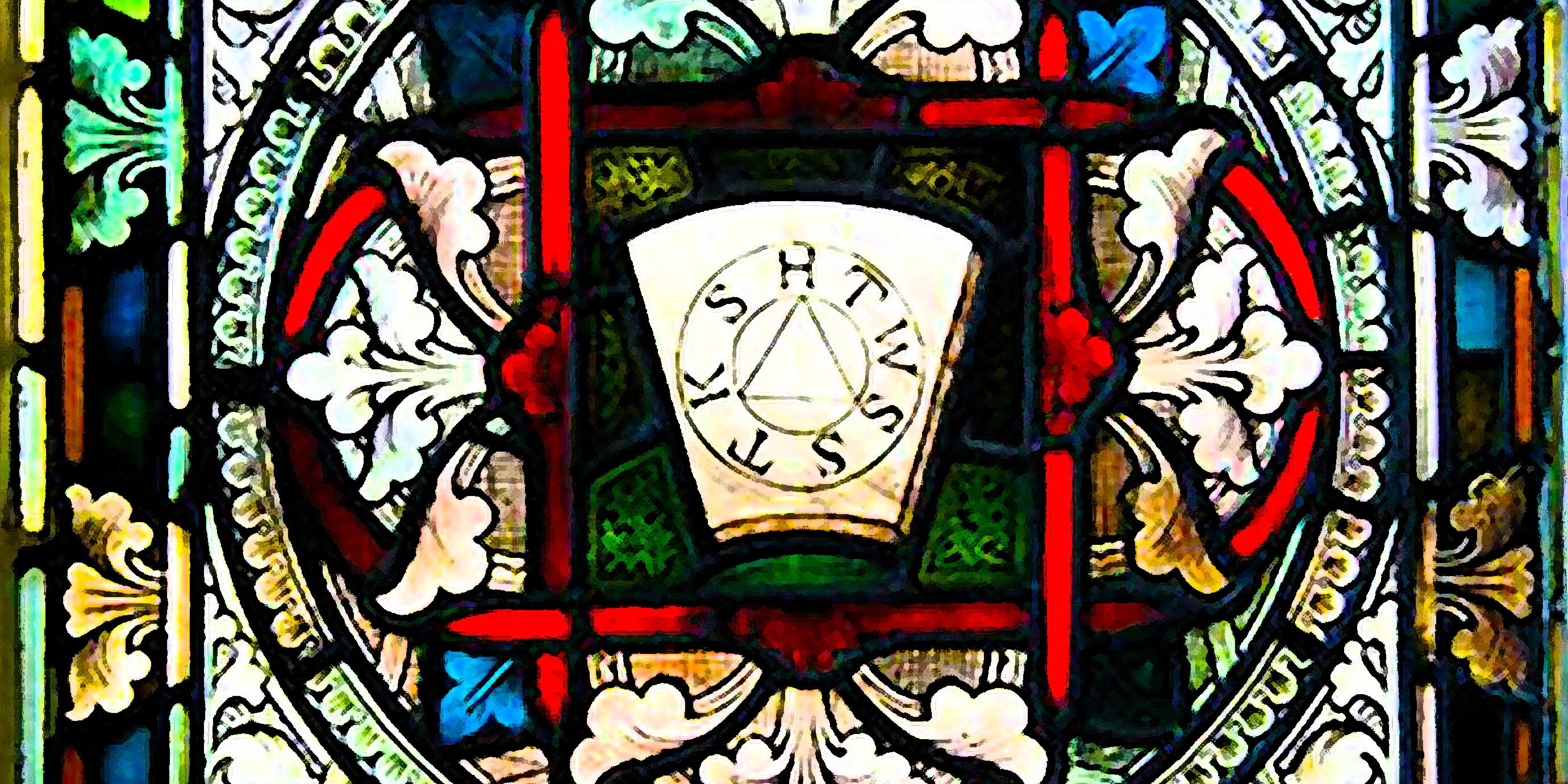
The jewel of the Mark Degree consists of a keystone, made usually of white cornelian, on which are engraved certain mystic letters, the meaning of which are revealed to members of the Degree. It is suspended from a blue and red ribbon. The aprons and collars are also made of blue and red silk.
The teaching of this Degree is largely an amplification of the Second, and tells of education and reward for labour. It also contains a dramatic warning against attempting to obtain wages to which we are not justly entitled, and there is a Messianic hint in the fact “That the stone which the builders rejected has become the headstone of the corner.” Incidentally the stone is a keystone, hence the origin of the jewel of the degree. Several facts lead us to suspect that at one time the Degree may have been more pronouncedly Christian than it is to-day. We know that it was flourishing as far back as 1760 in Lodges attached to the Ancients, who were unquestionably strongly pro-Christian.
The legend as now given relates to a period in the building of the Temple previous to the tragedy, although there is abundant evidence to show that as late as the time of the formation of Mark Grand Lodge, 1856, many Mark Lodges in the North had a somewhat similar legend to that now used, but associated it with the second Temple instead of with the first.
Mark therefore, is, or should be, really part of our Craft system, and in Scotland Craft Lodges still have the power to confer it, and constantly do so. In that country it is a necessary qualification for the Excellent Master which itself is an essential qualification for the Royal Arch. We shall refer to the Excellent Master more fully when we come to the Royal Arch, but it is desirable to point out that in Scotland Royal Arch Chapters also have the right to confer the Mark Degree, if a candidate has not already taken it in his Craft Lodge.
The Mark, as we have said, is the completion of the Second Degree, and in itself contains what are practically two degrees, namely, Mark Man and Mark Master. There has been much learned controversy as to whether the Mark Master was at one time conferred on a man as soon as he received his Second Degree. Since it is impossible at the moment to decide when the Mark Degrees arose in their present form, all we can say definitely is that so far as documentary evidence goes, i.e., back to 1760, it appears as if there were always the Degrees of Mark Man and Mark Master, and that although at any rate in theory, Mark Man might be conferred on a F.C., Mark Master seems always to have been restricted to Master Masons. In modern times both Mark Degrees are conferred together, and always on a M.M., although the Mark ritual throughout emphasises the connection with the Second Degree.
THE ARK MARINER.
The Mark Degree, or Degrees, also have associated with them, but in a separate “Lodge,” the Royal Ark Mariner Degree. This appears to be old “Operative” work, probably built up in the 18th century by genuine operative masons in the North of England, anxious to have some way of distinguishing a real “Working” mason from a “Speculative.” The same explanation probably brought into existence the Degree of St. Laurence the Martyr, of which more anon. The Ark Mariner legend relates to the Deluge, and is taken direct from the Bible. The most interesting features are the use of a stone, instead of the V.S.L., on which to take the Ob.. The reason for this is explained in the ritual, but it may be that we have here a survival of the old custom of swearing on a stone altar, which was the earliest form of a binding oath. There is also some interesting work with a triangle, but in the main it must be confessed that there is not much really deep teaching in the Degree. It is, however, quite a pretty little Degree, and has many ardent supporters. It is under the direct rule of Mark Grand Lodge.
Article from THE HIGHER DEGREES’ HANDBOOK – W. B r o. J.S.M. WARD