Devon Air Ambulance Trust given £4,000 by Freemasons

2b9153ab0a2040c36e3d55f9f8385b97

Devon Air Ambulance Trust given £4,000 by Freemasons

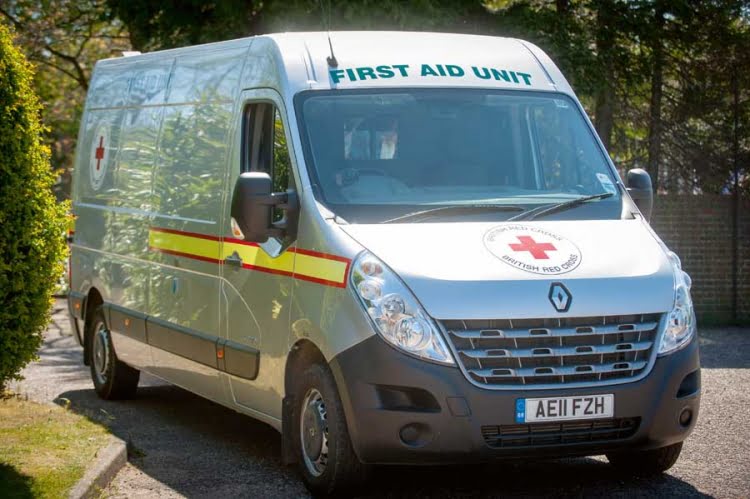
The Devonshire Freemasons have donated £4,000 to the Devon Air Ambulance Trust. Ian Kingsbury the Rt. Worshipful Provincial Grand Master of Devonshire presented a cheque to charity personnel as part of an on-going relationship between Freemasons and the Air Ambulance Trusts throughout England and Wales. Since 2007 Devonshire Freemasons have given in excess of £43,000 to the charity as well as many of the 138 lodges situated throughout the county also giving individual donations making that figure more than £100,000 in total.

Freemasons support Bucks visual impairment charity with generous donation

Freemason circle angle freemasons square compass classic round sticker raa1dddf2b1b54ae291ba37a883e46bc8 v9waf 8byvr 324

Freemasons support Bucks visual impairment charity with generous donation

A group of Freemasons have stepped in to help a Bucks blindness charity with a generous donation. Amersham Lodge donated £1,000 to the Wycombe division of Bucks Vision, a visual impairment charity which supports people who suffer with blindness in Wycombe and the surrounding villages. Downley resident and Freemason, Joe Bowler, who suffers with blindness himself, asked his Lodge to donate some much-needed cash to the volunteer group. Dr Richard Waterfield presented the cheque to the charity’s social secretary Barbara Rippington, alongside Mr Bowler and fellow Lodge member Peter Kemp. Bucks Vision urgently need more volunteer drivers to transport members to social, craft and bowls clubs

Freemasons donate to causes

2b9153ab0a2040c36e3d55f9f8385b97

Freemasons donate to causes

The Derbyshire, Leicestershire and Rutland Air Ambulance and Home Start Melton and Rutland were among the local charities gifted a share of £36,000 at a recent Freemasons presentation event. The air ambulance received £11,000 and Home Start received funding to pay for children to attend a Christmas pantomime. ADVERTISING The money was generously donated by the Leicestershire and Rutland Masonic Charity Association, the Freemasons’ Grand Charity and the Leicestershire and Rutland Royal Arch Masons. A total of 23 local charities received a share of the cash.

Butterfly Service status awarded to RMBI care homes by Dementia Care Matters – Freemasonry Today

a021225ab2d5c80e27434914ac3a2751

Butterfly Service status awarded to RMBI care homes by Dementia Care Matters – Freemasonry Today

RMBI care homes Queen Elizabeth Court in Llandudno and Prince Michael of Kent Court in Watford have been recognised with a prestigious award for their care of people living with dementia The Butterfly Service status is a nationally recognised ‘kitemark’ awarded by Dementia Care Matters to identify care homes that are committed to delivering excellent dementia care and providing residents with a high quality of life. Only a handful of care homes in the UK have been awarded the status, and Queen Elizabeth Court and Prince Michael of Kent Court now join four other RMBI care homes around the country to have received the award. RMBI care homes Devonshire Court in Leicester, Shannon Court in Surrey, Barford Court in Hove and Prince Edward Duke of Kent Court in Essex have also received the Butterfly Service status. Debra Keeling, RMBI Deputy Director of Care Operations, said, ‘To have been awarded the Butterfly Service status is testament to the dedication of our care home staff providing exceptional care. We have made a substantial investment in dementia care training for staff and hold regular events and initiatives for our residents as part of our drive to support their welfare and wellbeing.’ Debra believes that the award demonstrates the RMBI’s commitment to delivering innovative care techniques to maintain the highest quality of life for its residents, as well as putting solid foundations in place to continue to provide excellent care as the number of those with dementia increases over the next few years. ‘As a charity we have been working closely with Dementia Care Matters since 2009, and with a number of other specialist dementia providers to deliver our dementia care strategy,’ said Debra. ‘Dementia Care Matters works with care providers with the aim of improving the quality of life for residents of care homes – not only for those with dementia, but also for the other residents living in the same home.’

RMBI’s Ecclesholme care home honoured at Apprenticeship Awards Evening – Freemasonry Today

a174f6edfe4714c3c7088733207e673f

RMBI’s Ecclesholme care home honoured at Apprenticeship Awards Evening – Freemasonry Today

An RMBI care home in Ecclesholme has received an award for its ongoing work to support students in the local community Each year for the past five years, the RMBI’s Ecclesholme care home in Manchester has enrolled two students from Salford City College onto its 12-month apprenticeship scheme. During this time the students, who are also completing their National Vocational Qualifications in care, work alongside RMBI staff to gain experience in the sector. They are encouraged to take part in the in-house training, which is mandatory for all RMBI staff, and tutors from the college visit the home to carry out assessments. The care home was selected for an award by Salford City College in recognition of its continued support and commitment to the apprenticeship programme. Speaking about the scheme, Beverley Niland, Ecclesholme Home Manager, said: ‘We are delighted to have been selected as the winner of this award. We have found the programme very successful and in most cases the students take up permanent employment with us after completion of their course.’ Staff from Ecclesholme received the award at the Apprenticeship Awards Evening hosted by Mark Jenkins of Channel 4’s The Hotel. In addition to the scheme with Salford City College, the care home also works closely with two local schools to provide work experience for a couple of students on a weekly basis. The students support the home’s activities coordinator, helping to plan and implement engaging and stimulating activities for residents.

FAMOUS FREEMASONS – EDWARD JENNER has saved more lives than the work of any other man:

130513150716 lifeswork jenner story top

It has been said that the discovery of the smallpox vaccine in the late eighteenth century by Freemason, Edward Jenner has saved more lives than the work of any other man: Jenner has been fairly described as the ‘father of immunology’.

The publication in 1798 of Jenner’s findings that cowpox could protect against the feared and usually fatal disease – smallpox – gained him instant support by members of the scientific community. Recognition of his work was reflected in the foundation of the Jennerian Society in London in 1803 by admirers in order to promote vaccination among the poor; Jenner was actively involved in its affairs. Government grants followed and Jenner carried out further experimental work on his vaccine. His interest in science led him to form a number of scientific societies and he was to become a Fellow of the Royal Society.

Read more

Signed sealed delivered – Freemasonry Today

2b9153ab0a2040c36e3d55f9f8385b97

Signed sealed delivered – Freemasonry Today

When Freemasons’ Hall welcomed actors Benedict Cumberbatch, Sir Ian McKellen and Tom Hiddleston into the Grand Temple, Jessica Hopkins was in the audience to listen to messages of love and anguish in Letters Live Without words we’d be forever fumbling in the dark; letters throw light wherever they are cast.’ And so opens a night of extraordinarily moving literary entertainment at Freemasons’ Hall. It began as a simple idea: a website dedicated to photos of remarkable letters from the past, accompanied by transcriptions and introductions. Letters of Note then became something of a Twitter sensation before becoming a hardback anthology and then morphing into Letters Live. This year’s five-night live performance spectacular at London’s Freemasons’ Hall in April saw a glittering line-up of performers read against the glorious Art Deco backdrop of the Grand Temple. While events at Freemasons’ Hall do tend to be bespoke, one-off occasions, Letters Live offered the chance to do something quite different. ‘It was unique and like nothing we had done before,’ explains Karen Haigh, Head of Events at the Hall. ‘Even though I knew we could do it, I also realised that we had never done anything on this scale.’ With 7,500 tickets sold, more than 40 performers treading the boards and some 100 letters read aloud – not to mention an unexpected fire blazing beneath the streets of nearby Holborn – it was no small feat to pull off. When the Holborn fire forced Freemasons’ Hall to cancel the Wednesday performance, many of those scheduled to read that night came along to the Thursday show instead, creating a dream playbill: a who’s who of the stage and screen scene.

£42k joint donation to Spinal Research leading to potential breakthrough

954814948 file000440677918

TOUCHING A NERVE

BY IDENTIFYING A PROTEIN THAT IS VITAL IN NERVE DEVELOPMENT, PROFESSOR ROGER KEYNES AND HIS TEAM HOPE THEY MIGHT HELP TO CURE SPINAL CORD PARALYSIS. IMOGEN BEECROFT REPORTS ON HOW FREEMASONS ARE SUPPORTING THIS GROUNDBREAKING RESEARCH

A promising gymnast since the age of eight, Josh trained six days a week to fulfil his ultimate goal of competing in the London 2012 Olympic Games. When Josh was 16, a fall ended this dream and left him paralysed from the chest down.

Of the 20 people a day who sustain a spinal injury in the UK, three are told they will never walk again. There is currently no effective medical treatment for the 50,000 people in the UK and Ireland living with spinal cord paralysis, meaning that people like Josh face a lifetime of round-the-clock care.

The figures are so high because the nerves connecting the brain and the body are commonly damaged – or even severed – in a spinal cord injury, destroying this vital communication link.

However, after decades of research, a spinal cord injury may no longer result in a life spent in a wheelchair. Two Cambridge academics, Professor Roger Keynes and Dr Geoffrey Cook, have identified a protein that has the potential to aid recovery after injury, possibly even helping nerves to regrow and self-repair.

FUNDING BOOST

In November 2014, The Freemasons’ Grand Charity and the Masonic Samaritan Fund (MSF) donated £42,000 to the International Spinal Research Trust (ISRT), which is supporting the project. Despite being the UK’s leading charity funding research into medical treatment for spinal cord paralysis, the ISRT team operates on just £2 million of donations a year.

ISRT trust manager James Clark says: ‘Given the size of the charity, this is a really significant donation. The project costs about £90,000, so the MSF and The Freemasons’ Grand Charity are effectively funding about half of it.’ Specifically, the masonic donation has helped to fund one of the ISRT’s PhD studentships. These three-year projects will identify the researchers of tomorrow – those who will go on to play a central part in the development of treatments for spinal injury.

Professor Keynes speaks highly of the studentship, emphasising that it not only provides his team with a PhD student, Julia Schaeffer, to assist them, but also gives her a great education. ‘It’s absolutely essential that we have a student to work with,’ he says. ‘Julia is learning lots of different techniques, and her input, ideas and skills at the bench are absolutely critical as these are very tricky experiments.’

‘The professors have worked for two decades to identify a protein that performs a vital function in the early stages of development.’
PATTERNING PROTEINS

Calling these experiments ‘tricky’ might be something of an understatement: the professors have been working for two decades to identify a crucial protein that performs a vital function in the early stages of development. It is an inhibitor, stopping the growth of nerves where necessary and controlling the pattern in which they develop.

Humans are able to move and feel because they have a patterned system of nerves connecting the spinal cord with muscles and skin. In order to make this connection, nerves must navigate through the vertebrae that surround the spinal cord and it is this specific protein that allows them to do so.

Professor Keynes now hypothesises that the body expresses more of this protein following a spinal cord or brain injury, which could inhibit nerve development and prevent recovery. ‘The protein’s normal function is to steer nerves out of the spinal cord,’ he explains, ‘but we believe that it is also expressed at an injury site, preventing the nerves within the spinal cord from regrowing.’

The idea is being tested at the Cambridge Centre for Brain Repair in collaboration with Professor James Fawcett. If it is possible to stop this protein from functioning in such a way after injury, the damaged nerves might be able to regrow.

It might seem far-fetched, but, as Clark notes, ‘When we started the ISRT in 1980, people thought the things we were working on were a waste of time. They believed that once someone had been paralysed it was impossible to repair their central nervous system. Work over the past 30 years has proved that wrong – you potentially can.’

Progress has only been possible because of donations like the one made by the masonic charities, as the ISRT receives no government funding. Ian Sabin, MSF trustee and research committee member, explains the decision to donate to this particular project: ‘This charity was thought to be well worth supporting. The research will provide another piece of the jigsaw and contribute towards the understanding of nerve-growth-blocking factors and spinal cord regeneration. It will hopefully help to show the way forward in the development of new treatments for spinal cord injury.’

‘We’re convinced by the potential importance of what we’re doing, so charity funding is critical.’ Professor Roger Keynes
BARRIERS TO RESEARCH

As a consultant neurosurgeon, Sabin is well aware of the difficulties facing medical researchers in the UK. ‘Medical and scientific research in the UK is handicapped by a relative lack of funding. Doctors are choosing not to go into research posts for all sorts of reasons but the difficulty in obtaining research grants is certainly one of them. The fact that we [the MSF] can provide some funds is very important – it’s a shame that as a country we don’t take scientific research more seriously.’

Professor Keynes echoes Sabin’s point about the importance of research funding. ‘It has taken us a long time to get this far, and it’s not easy to keep funding going if you’re not producing vast amounts of publications. But we’re convinced by the potential importance of what we’re doing, so this sort of charity funding is critical.’

If their ideas are correct, and yield successful results, what will this mean for those suffering from spinal cord injuries? ‘If we are right,’ says Professor Keynes, ‘and this protein is blocking nerve growth in damaged areas, and we could stop this, then regeneration could take place.’

Professor Keynes notes that regeneration has always been possible in nerves of the arms and legs. ‘If they are damaged they can regrow, self-repair and wire up reasonably well. The problem is that nerves in the brain and spinal cord don’t do this, so the hope is that if we can identify the brakes on these nerves and what they’re due to, they too could self-repair.’

While perhaps still a long way off, this research could open up a whole world of hope and opportunity for those paralysed after a spinal cord injury. As Professor Keynes says, ‘It’s not impossible, put it that way.’

£1m giveaway to medical research projects to mark 25th anniversary of MSF – Freemasonry Today

192139531 MSF A bionic arm developed by RAFT

£1m giveaway to medical research projects to mark 25th anniversary of MSF – Freemasonry Today

The silver shortlist To mark the 25th anniversary of the Masonic Samaritan Fund (MSF), the trustees are making available £1 million in support of medical and care research projects  The MSF is planning to award grants of up to £100,000 in 10 regions across England and Wales. Its Silver Jubilee Research Fund originally received 62 grant applications, seeking nearly £9 million in support. However, with only £1 million available through the fund, the charity will need to make some difficult decisions.

Since 2011, the MSF has supported research projects that aim to improve the prevention, detection, diagnosis, treatment and care available for illnesses and disabilities that affect masonic families and the wider community. Nearly £2 million has been awarded to large and small research organisations such as Breakthrough Breast Cancer, Carers UK and the A-T Society. Several research projects funded by the MSF have achieved significant success in their field.

A £181,000 grant awarded to Alzheimer’s Research UK has helped to develop a new blood test that, it is hoped, will predict whether someone with early memory problems will develop Alzheimer’s within a year.

Two grants totalling £75,000 awarded to RAFT (the Restoration of Appearance and Function Trust) have helped to develop a working prototype of a bionic arm fit for human trials, in a bid to compensate for the loss of a limb.

A grant of £34,000, presented to Prostate Cancer UK, has helped Dr Hayley Whitaker and her team to identify that the presence of a specific protein can distinguish prostate cancers that are aggressive from those that may never seriously harm the patient.

Dogs for the Disabled making a huge difference thanks to Grand Charity support – Freemasonry Today

2b9153ab0a2040c36e3d55f9f8385b97

Dogs for the Disabled making a huge difference thanks to Grand Charity support – Freemasonry Today

Thanks to support from the Grand Charity, Dogs for the Disabled was able to launch a groundbreaking scheme that has profoundly changed the lives of children with autism and their families When Dogs for the Disabled first approached the Grand Charity in 2010, requesting support for a pilot scheme they had devised aimed at assisting children with autism, no one knew for certain if it would work. But the project has become so successful it is now a global export, with programmes operating in the Netherlands, Spain, Belgium and Australia. Through the PAWS Service, families learn how to train a pet dog to support and help a child with autism, and receive advice on choosing the right dog for their child’s needs. To date, more than 600 UK families have benefited from PAWS, and its 2016 workshops, to be held countrywide, are already filling up fast.