£42k joint donation to Spinal Research leading to potential breakthrough

954814948 file000440677918

TOUCHING A NERVE

BY IDENTIFYING A PROTEIN THAT IS VITAL IN NERVE DEVELOPMENT, PROFESSOR ROGER KEYNES AND HIS TEAM HOPE THEY MIGHT HELP TO CURE SPINAL CORD PARALYSIS. IMOGEN BEECROFT REPORTS ON HOW FREEMASONS ARE SUPPORTING THIS GROUNDBREAKING RESEARCH

A promising gymnast since the age of eight, Josh trained six days a week to fulfil his ultimate goal of competing in the London 2012 Olympic Games. When Josh was 16, a fall ended this dream and left him paralysed from the chest down.

Of the 20 people a day who sustain a spinal injury in the UK, three are told they will never walk again. There is currently no effective medical treatment for the 50,000 people in the UK and Ireland living with spinal cord paralysis, meaning that people like Josh face a lifetime of round-the-clock care.

The figures are so high because the nerves connecting the brain and the body are commonly damaged – or even severed – in a spinal cord injury, destroying this vital communication link.

However, after decades of research, a spinal cord injury may no longer result in a life spent in a wheelchair. Two Cambridge academics, Professor Roger Keynes and Dr Geoffrey Cook, have identified a protein that has the potential to aid recovery after injury, possibly even helping nerves to regrow and self-repair.

FUNDING BOOST

In November 2014, The Freemasons’ Grand Charity and the Masonic Samaritan Fund (MSF) donated £42,000 to the International Spinal Research Trust (ISRT), which is supporting the project. Despite being the UK’s leading charity funding research into medical treatment for spinal cord paralysis, the ISRT team operates on just £2 million of donations a year.

ISRT trust manager James Clark says: ‘Given the size of the charity, this is a really significant donation. The project costs about £90,000, so the MSF and The Freemasons’ Grand Charity are effectively funding about half of it.’ Specifically, the masonic donation has helped to fund one of the ISRT’s PhD studentships. These three-year projects will identify the researchers of tomorrow – those who will go on to play a central part in the development of treatments for spinal injury.

Professor Keynes speaks highly of the studentship, emphasising that it not only provides his team with a PhD student, Julia Schaeffer, to assist them, but also gives her a great education. ‘It’s absolutely essential that we have a student to work with,’ he says. ‘Julia is learning lots of different techniques, and her input, ideas and skills at the bench are absolutely critical as these are very tricky experiments.’

‘The professors have worked for two decades to identify a protein that performs a vital function in the early stages of development.’
PATTERNING PROTEINS

Calling these experiments ‘tricky’ might be something of an understatement: the professors have been working for two decades to identify a crucial protein that performs a vital function in the early stages of development. It is an inhibitor, stopping the growth of nerves where necessary and controlling the pattern in which they develop.

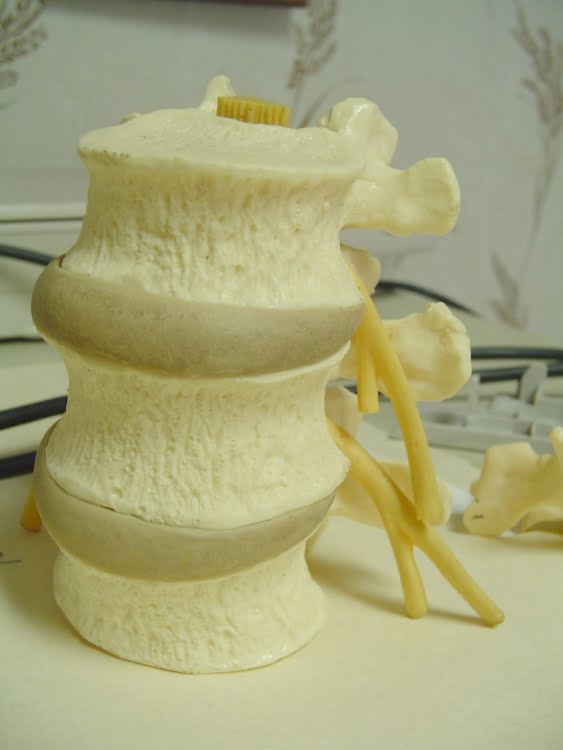
Humans are able to move and feel because they have a patterned system of nerves connecting the spinal cord with muscles and skin. In order to make this connection, nerves must navigate through the vertebrae that surround the spinal cord and it is this specific protein that allows them to do so.

Professor Keynes now hypothesises that the body expresses more of this protein following a spinal cord or brain injury, which could inhibit nerve development and prevent recovery. ‘The protein’s normal function is to steer nerves out of the spinal cord,’ he explains, ‘but we believe that it is also expressed at an injury site, preventing the nerves within the spinal cord from regrowing.’

The idea is being tested at the Cambridge Centre for Brain Repair in collaboration with Professor James Fawcett. If it is possible to stop this protein from functioning in such a way after injury, the damaged nerves might be able to regrow.

It might seem far-fetched, but, as Clark notes, ‘When we started the ISRT in 1980, people thought the things we were working on were a waste of time. They believed that once someone had been paralysed it was impossible to repair their central nervous system. Work over the past 30 years has proved that wrong – you potentially can.’

Progress has only been possible because of donations like the one made by the masonic charities, as the ISRT receives no government funding. Ian Sabin, MSF trustee and research committee member, explains the decision to donate to this particular project: ‘This charity was thought to be well worth supporting. The research will provide another piece of the jigsaw and contribute towards the understanding of nerve-growth-blocking factors and spinal cord regeneration. It will hopefully help to show the way forward in the development of new treatments for spinal cord injury.’

‘We’re convinced by the potential importance of what we’re doing, so charity funding is critical.’ Professor Roger Keynes
BARRIERS TO RESEARCH

As a consultant neurosurgeon, Sabin is well aware of the difficulties facing medical researchers in the UK. ‘Medical and scientific research in the UK is handicapped by a relative lack of funding. Doctors are choosing not to go into research posts for all sorts of reasons but the difficulty in obtaining research grants is certainly one of them. The fact that we [the MSF] can provide some funds is very important – it’s a shame that as a country we don’t take scientific research more seriously.’

Professor Keynes echoes Sabin’s point about the importance of research funding. ‘It has taken us a long time to get this far, and it’s not easy to keep funding going if you’re not producing vast amounts of publications. But we’re convinced by the potential importance of what we’re doing, so this sort of charity funding is critical.’

If their ideas are correct, and yield successful results, what will this mean for those suffering from spinal cord injuries? ‘If we are right,’ says Professor Keynes, ‘and this protein is blocking nerve growth in damaged areas, and we could stop this, then regeneration could take place.’

Professor Keynes notes that regeneration has always been possible in nerves of the arms and legs. ‘If they are damaged they can regrow, self-repair and wire up reasonably well. The problem is that nerves in the brain and spinal cord don’t do this, so the hope is that if we can identify the brakes on these nerves and what they’re due to, they too could self-repair.’

While perhaps still a long way off, this research could open up a whole world of hope and opportunity for those paralysed after a spinal cord injury. As Professor Keynes says, ‘It’s not impossible, put it that way.’

£1m giveaway to medical research projects to mark 25th anniversary of MSF – Freemasonry Today

192139531 MSF A bionic arm developed by RAFT

£1m giveaway to medical research projects to mark 25th anniversary of MSF – Freemasonry Today

The silver shortlist To mark the 25th anniversary of the Masonic Samaritan Fund (MSF), the trustees are making available £1 million in support of medical and care research projects  The MSF is planning to award grants of up to £100,000 in 10 regions across England and Wales. Its Silver Jubilee Research Fund originally received 62 grant applications, seeking nearly £9 million in support. However, with only £1 million available through the fund, the charity will need to make some difficult decisions.

Since 2011, the MSF has supported research projects that aim to improve the prevention, detection, diagnosis, treatment and care available for illnesses and disabilities that affect masonic families and the wider community. Nearly £2 million has been awarded to large and small research organisations such as Breakthrough Breast Cancer, Carers UK and the A-T Society. Several research projects funded by the MSF have achieved significant success in their field.

A £181,000 grant awarded to Alzheimer’s Research UK has helped to develop a new blood test that, it is hoped, will predict whether someone with early memory problems will develop Alzheimer’s within a year.

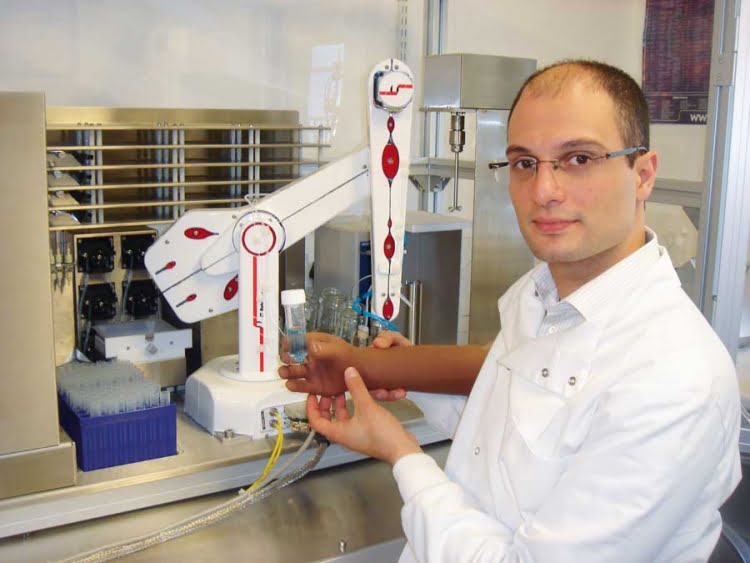
Two grants totalling £75,000 awarded to RAFT (the Restoration of Appearance and Function Trust) have helped to develop a working prototype of a bionic arm fit for human trials, in a bid to compensate for the loss of a limb.

A grant of £34,000, presented to Prostate Cancer UK, has helped Dr Hayley Whitaker and her team to identify that the presence of a specific protein can distinguish prostate cancers that are aggressive from those that may never seriously harm the patient.

Dogs for the Disabled making a huge difference thanks to Grand Charity support – Freemasonry Today

2b9153ab0a2040c36e3d55f9f8385b97

Dogs for the Disabled making a huge difference thanks to Grand Charity support – Freemasonry Today

Thanks to support from the Grand Charity, Dogs for the Disabled was able to launch a groundbreaking scheme that has profoundly changed the lives of children with autism and their families When Dogs for the Disabled first approached the Grand Charity in 2010, requesting support for a pilot scheme they had devised aimed at assisting children with autism, no one knew for certain if it would work. But the project has become so successful it is now a global export, with programmes operating in the Netherlands, Spain, Belgium and Australia. Through the PAWS Service, families learn how to train a pet dog to support and help a child with autism, and receive advice on choosing the right dog for their child’s needs. To date, more than 600 UK families have benefited from PAWS, and its 2016 workshops, to be held countrywide, are already filling up fast.

Almoner support for seniors – Freemasonry Today

f29634bb2d7d7016dfa51d05e31dfee3

Almoner support for seniors – Freemasonry Today

With 2.9 million older people feeling they have no one to turn to for help and support, Aileen Scoular meets Dame Esther Rantzen DBE and Provincial Grand Almoner Ernie Greenhalgh to find out how Freemasons are making a difference in West Lancashire  No one wants to feel alone. But for the 11 million people in the UK aged 65 and over, loneliness and isolation are all too familiar. A survey by Age UK has revealed that one in four older people feel that they have no one to go to for help and support. Contact the Elderly, another UK charity that aims to lessen the effects of isolation, echoes these views: other than visits from a carer, around 70 per cent of the elderly people who use its service receive visits just once a week or less. Yet loneliness and isolation can be avoided. A chat on the phone, a cup of tea or a shared joke with a neighbour takes just minutes, but the positive effects of human interaction last long after the conversation ends. The reassuring news is that there are organisations out there making that happen, one of which is the Freemasons.

St Euny Masonic Lodge celebrates 70th anniversary

64ef4678492e90e5bd9ad4f1828dfa42

St Euny Masonic Lodge celebrates 70th anniversary

The St Euny Masonic Lodge celebrated its 70th anniversary earlier this month by holding a service of thanksgiving at the Masonic Hall in Redruth. The service was presided over by the Worshipful Master, Paul Phillips and the officiant was the Rev Dr Peter Blackwell Smythe, the Provincial Chaplain. The St Euny Lodge was originally consecrated by the Earl of St Germans, the Provincial Grand Master; assisted by Canon HR Jennings, deputy Provincial Grand Master. This ceremony took place at the crypt of St Andrews Church in Redruth on May 17, 1945 so the anniversary service took place exactly 70 years to the day. St Euny Lodge was borne out of Druids Lodge, No 589 one of the oldest lodges in Cornwall. Among the invited guests were Cllr Will Tremayne, mayor of Redruth; Cllr Henry Biscoe, deputy mayor of Redruth; Cllr Mars Alison Biscoe, deputy mayoress of Redruth, and Mr Nuno DeFatos, president of Redruth Chamber of Commerce. In his opening address, the Worshipful Master, gave thanks to the founders of the lodge, and recalled the importance of maintaining a link with them even if now it is only a memory. He went on to say how much he and the members were looking forward to the future of Freemasonry especially in Redruth and added that St Euny had been fortunate of late in having a sizeable intake of younger members which augured well for that future. M Phillips the outline the generous giving of the Order in general and Cornish Freemasons in particular by summarising the many millions of pounds donated to non-Masonic organisations, including £50, 000 to the Nepal earthquake via the British Red Cross, and £700 pounds to the Redruth Alzeimer’s Society.

Duke of Edinburgh’s £20,000 grant from the Freemasons to set up challenge for disabled

ab86addbdd5ef673bfaf3bd27888e049

Duke of Edinburgh’s £20,000 grant from the Freemasons to set up challenge for disabled

A pioneering challenge course is set to bring huge benefits to disabled people in Kirklees. The only one of its kind in the north of England, the course has been made possible by a £20,000 grant to the local Duke of Edinburgh’s Award Trust. Freemasons in West Yorkshire have donated the cash to create the facility at Little Deer Wood in Mirfield and both able-bodied and disabled people will be able to access the course. Sponsored by Howley Lodge in Batley, the grant will be used to fund the low-rope challenge course with a wheelchair-accessible path for the disabled to get to this and other facilities at the Little Deer Wood site. The course will be strung beneath trees with a series of linked challenges. It is designed to be environmentally friendly and as no concrete will be used, should last for many years. The ropes, wires and other elements that make up the obstacles are no more than 50cm from the floor but team members must remain off the ground as they negotiate the course. Courses like these are becoming more popular in the UK, but, there are only two which are totally accessible for able-bodied and disabled people.

Visitors gather for rare look inside Hanging Chapel in Langport

a174f6edfe4714c3c7088733207e673f

Visitors gather for rare look inside Hanging Chapel in Langport

A SELECT few lucky visitors to Langport were given a unique insight into one of the town’s most iconic buildings. The Hanging Chapel, which is managed by the Langport Town Trust, opened its doors to a group of 30 visitors on Saturday afternoon. The chapel was constructed in the early-14th century and was originally known as the Chantry of the Blessed Mary of Langport Eastover. Over the centuries, the chapel has performed many different roles within the town, serving as the town hall between 1547 and 1600. Since 1891 it has fulfilled its current role, as the home to the Portcullis Freemasons Lodge, which meets there every second Thursday evening of the month. Former lodge master Robert Webb was on hand to guide visitors around and to answer questions about the chapel’s history. The chapel, which is Grade 1 listed, contains many fine examples of traditional stained glass.

Stamford Freemasons lend their support to charities

Freemason circle angle freemasons square compass classic round sticker raa1dddf2b1b54ae291ba37a883e46bc8 v9waf 8byvr 324

Stamford Freemasons lend their support to charities

The Lodge of Merit No 466 based in the Masonic Centre in Stamford has marked its 175th year by allocating funds to various charities. Sue Sandall, the mayor of Stamford, received £3,000 for her chosen charities, while a further £1,000 was divided equally between for Teddies for Loving Care, which provides a teddy bear for children going into hospital for treatment, Friends of Devonshire Court a home for the elderly and infirmed, The Provincial Masonic Funds and The Masonic Centre. A further £500 was presented to Sunflowers, a self-supporting group of volunteers and £345 went to The Stroke Association.

First stones laid on Durham Cathedral’s new Great Kitchen floor following £121k Freemasons donation

39d6832b645156d7a61659c3bb6b3bcf

First stones laid on Durham Cathedral’s new Great Kitchen floor following £121k Freemasons donation

A special cathedral restoration project has reached a landmark milestone thanks to a £121,000 community donation. Following a year-long fundraising appeal by local Freemasons, the first stones of Durham Cathedral’s new Great Kitchen floor were laid as part of the religious site’s Open Treasure project. The current £10m programme of works will transform some of the Cathedral’s most historic buildings into exhibition spaces, with the Great Kitchen set to display the treasures of St Cuthbert alongside other items from the Cathedral collections and exhibits on loans. In support of the plans, the Provincial Grand Lodge of Durham invited individual Freemasons and Lodges from the surrounding areas to support the appeal by sponsoring a stone tile, to be laid on the floor of the Great Kitchen.